


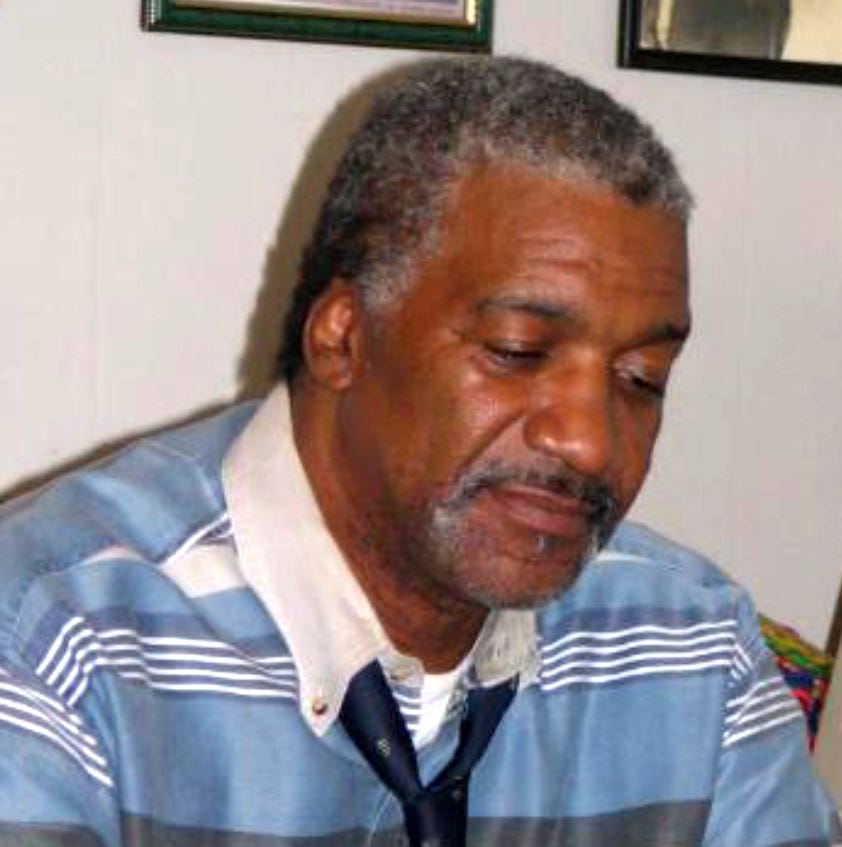
Recorded during Black History Month 2026 as part of the Southern Justice Archive’s ongoing effort to preserve the voices of living witnesses to the Civil Rights and Environmental Justice movements.
As Black History Month 2026 came to a close, The Southern Justice Archive preserved an important living testimony through an extended conversation between Wilkie Sherard Frieson and Anniston native David B. Baker — lifelong civil rights activist, labor organizer, environmental justice advocate, and community leader whose work spans more than half a century of struggle and service.
The interview was not conducted merely to remember history, but to recognize a man who has lived inside it — and who continues to shape it.
At seventy-five years old, Baker speaks with the clarity of someone who has witnessed movements rise, institutions change, and communities fight for survival. His reflections move seamlessly between personal memory and public history, revealing how local activism often carries national consequences.
A Legacy Rooted in Family and Community
The conversation carries an added layer of meaning: Baker is a blood cousin of the late Wilkie Clark, linking the interview to a broader family tradition of civic leadership and community advocacy across East Alabama.
Rather than presenting himself as a solitary figure, Baker repeatedly situates his journey within relationships — family, neighbors, organizers, and elders who shaped his understanding of responsibility. The discussion emphasizes that civil rights work was never an abstract cause; it was a duty grounded in protecting one’s own community.
This perspective anchors the entire interview.
Civil Rights Beyond the Headlines
One of the most striking themes emerging from the discussion is how Baker’s life illustrates the second generation of civil rights activism — the period after marches and landmark legislation, when communities faced quieter but equally devastating battles.
Baker recounts organizing efforts that extended into labor advocacy and grassroots mobilization, demonstrating how economic justice and civil rights were inseparable realities.
His experiences reveal a truth often missing from mainstream narratives: after national victories were declared, local activists remained on the ground confronting persistent inequality in housing, employment, health, and environmental safety.
The Fight for Environmental Justice in Anniston
The interview reaches its most powerful moments when Baker reflects on the environmental crisis that reshaped Anniston, Alabama.
As founder of Community Against Pollution (CAP), Baker became a central figure in exposing the long-term effects of PCB contamination tied to industrial dumping. Earlier reporting documented how generations of residents unknowingly lived amid toxic exposure that affected health, property, and quality of life.
TPV11.04.05 copy
In the conversation, Baker describes how activism evolved from questions asked by ordinary citizens — parents noticing illness patterns, neighbors comparing experiences, communities demanding answers.
What emerges is not simply a legal battle, but a grassroots awakening. Residents learned to advocate for themselves, organize collectively, and insist that environmental health was a civil rights issue.
The interview makes clear that environmental justice was not a departure from the Civil Rights Movement — it was its continuation.
Connections to a National Movement
Frieson framed the interview partly as a tribute following the passing of Reverend Jesse L. Jackson, highlighting Baker’s interactions with national civil rights leadership.
Through these recollections, listeners gain insight into how local organizers and national figures operated within the same ecosystem of activism. Movements were sustained not only by famous speeches but by everyday organizers who built trust within communities.
The conversation underscores how leadership flowed both directions — from grassroots communities upward and from national advocacy back down into local action.
Memory, Faith, and Persistence
Throughout the interview, Baker returns repeatedly to themes of faith, endurance, and accountability to future generations.
His reflections suggest that activism is less about moments of victory and more about sustained commitment — continuing the work even when recognition is limited and progress slow.
What stands out most is not nostalgia, but urgency. Baker speaks as someone convinced that the lessons of past struggles remain directly relevant to the present.
In this way, the interview becomes more than biography; it becomes instruction.
Why This Conversation Matters
The Southern Justice Archive exists to document voices that might otherwise fade from public memory. This conversation fulfills that mission by preserving the lived experience of a man whose work connects civil rights, labor organizing, and environmental justice into a single continuous story.
Baker’s life reminds us that history is not confined to famous cities or national stages. It unfolds in communities like Anniston — in neighborhood meetings, local organizing, and ordinary citizens refusing to accept injustice as inevitable.
By recording this dialogue, the Archive ensures that future generations will understand that the struggle for justice did not end with one era. It adapted, expanded, and continues today.
A Living Archive
This interview closes Black History Month not as a conclusion, but as an affirmation:
The Civil Rights Movement is not only something we study.
It is something still being lived.
And through voices like David B. Baker’s, its lessons endure.
The Southern Justice Archive
Presented By: Charlotte A. Clark-Frieson aka
Wilkie Clark’s Daughter”

“Documenting what happened, Preserving what matters, Protecting what must endure!


