


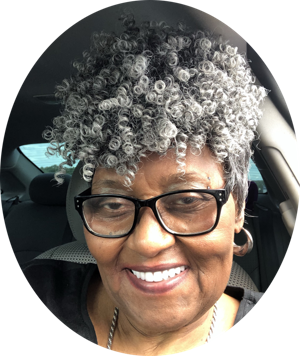
As someone who has lived, worked, organized, buried loved ones, served families, and run for office in this district, I have spent years watching communities struggle with questions of representation, economic development, education, healthcare access, and political participation. The observations in this article are not offered as partisan criticism, but as an examination of what political engagement actually looks like on the ground in East Alabama.
A recent Alabama Reflector article covering the Republican primary runoff for House District 37 caused me to revisit some political questions that have remained with me since my own campaign for the seat in 2018.
In 2018, I ran for Alabama House District 37.
I lost.
Badly.
But so did virtually every Democrat running statewide.
President Barack Obama once described a difficult election for his party as a “shellacking.” If there was ever a word that described what happened to Alabama Democrats in 2018, that was it.
Republicans dominated races from the courthouse to the State House. Democratic candidates weren’t simply defeated. They were overwhelmed.
Looking back, however, I believe many people drew the wrong lesson from those results.
The lesson was not that Democrats can never win House District 37.
The lesson was that Democrats have been trying to win the wrong way.
Today, political observers look at House District 37 and see a safe Republican district. After the recent Republican primary produced nearly 8,000 votes, many assume the race is effectively over before the general election begins.
Perhaps.
But perhaps not.
Before anyone declares House District 37 permanently out of reach, they should look more carefully at the numbers.
The district includes portions of Chambers, Randolph, and Cleburne Counties. Within those counties live thousands of Black citizens, thousands of working-class families, thousands of young voters, thousands of non-voters, and thousands of citizens who participate only occasionally in elections.
The question is not whether these citizens exist.
The question is whether anyone is organizing them.
For decades, Democrats have approached rural Alabama elections as persuasion contests. They spend precious resources trying to convince committed Republicans to vote differently.
That strategy has failed.
A better question is this:
What if the largest untapped voting bloc in House District 37 isn’t Republican voters at all?
What if it is people who rarely vote?
What if the future of the district depends not on changing minds, but on changing participation?
Republicans have spent years building a culture of voting. Their voters show up consistently. They vote in primaries, runoffs, municipal elections, special elections, and general elections.
Democrats often appear a few months before Election Day and disappear shortly afterward.
That is not a campaign strategy.
That is a recurring mistake.
Winning House District 37 would require a completely different approach.
First, Democrats would have to stop running national campaigns in local districts.
Most voters in East Alabama are not waking up every morning worried about partisan battles in Washington. They are worried about jobs, healthcare, schools, roads, economic opportunity, and whether their children will have a reason to stay in their hometowns after graduation.
Candidates who spend their time repeating national political talking points are speaking a language many local voters are tired of hearing.
Second, Democrats would need to rebuild relationships with communities they have too often taken for granted.
Churches.
Civic organizations.
Neighborhood associations.
Small business owners.
Educators.
Retirees.
Veterans.
Working families.
Politics in rural Alabama remains personal. People vote for people they know, trust, and see regularly.
Third, Democrats would need to invest in year-round voter registration and turnout efforts.
Not every four years.
Not every two years.
Every year.
The most important voter in House District 37 may not be the Republican who voted in the last election.
It may be the citizen who did not vote at all.
Fourth, Democrats would need to broaden their coalition.
Success would require strong support from Black voters, but that alone would not be enough.
Victory would also require support from independents, moderate conservatives, educators, healthcare workers, young voters, and citizens who simply want effective representation regardless of party label.
Finally, Democrats must recognize an uncomfortable truth.
Many voters in House District 37 may never become Democrats.
And they do not have to.
The objective is not ideological conversion.
The objective is building a coalition around common interests, shared economic concerns, strong schools, safe communities, responsible government, and opportunity for future generations.
That is how durable political movements are built.
Not through slogans.
Not through social media.
Not through wishful thinking.
Through organization.
Through relationships.
Through persistence.
Through turnout.
Can a Democrat win House District 37?
The answer is yes.
But only if Democrats stop fighting the last election and start building for the next decade.
The path is difficult.
The odds are long.
But the mathematics of political participation suggest that the district may be more competitive than conventional wisdom would have us believe.
The question is not whether victory is possible.
The question is whether anyone is willing to do the work required to make it happen.
Author’s Note: This article was inspired by a recent Alabama Reflector report on the House District 37 race and by the author’s experience as a Democratic candidate for the district in 2018. The views expressed are intended to encourage thoughtful discussion about voter participation, community engagement, and political representation in East Alabama.
The Southern Justice Archive
Presented By: Charlotte A. Clark-Frieson aka
Wilkie Clark’s Daughter”

“Documenting what happened, Preserving what matters, Protecting what must endure!
.