


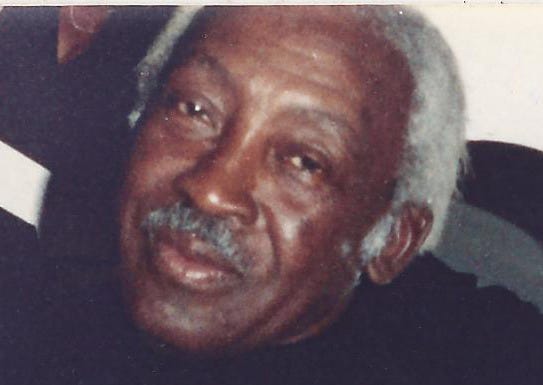
For more than half a century, a man in east Alabama carried a question that refused to let him rest.
His name was Joe Frank Grady, Sr.
Until the day he died in 2019, he was still searching for answers about his cousin — Stanley G. Trammell of Stroud, Alabama — who left home to serve his country and never returned.
There was no funeral.
No official explanation.
No notification to the family.
Only silence.
Who Was Stanley G. Trammell?
Stanley G. Trammell was born in Chambers County, Alabama, in or near the small community of Stroud. He was one of several children in a Black farming family, raised during a time when opportunity was limited, but service to country was still expected.
By 1917–1918, as the United States entered World War I, Stanley joined the United States Army.
Like many young Black men of his generation, he left home to serve.
He just never came back.
The Execution
Archival newspaper reports from July 1918 confirm that a soldier identified as “Stanley Tramble” of Stroud, Alabama was executed by hanging at Camp Dodge, Iowa following a United States Army court-martial.
Additional records reflect variations of the same name — “Tramble,” “Grammell,” and “Trammell”—a common distortion in early twentieth-century military documentation.
Despite these inconsistencies, the identity is clear.
Stanley G. Trammell was executed by the United States Army on July 5, 1918.
Reports indicate that the execution was carried out in front of a large assembly of soldiers—“virtually the entire division”—turning the event into a public spectacle of military discipline.
The Death Certificate
The official death certificate issued in Iowa confirms the details of Stanley Trammell’s death.
Date: July 5, 1918
Location: Camp Dodge, Iowa
Occupation: Soldier, U.S. Army
Cause of Death: “Legal Hanging”
Yet the document is as notable for what it does not include as for what it does.
There is no father listed.
No mother identified.
No next of kin recorded.
No meaningful personal history preserved.
Even by the standards of the early twentieth century, such omissions are striking.
The record reduces a human life to a single administrative phrase:
“Legal Hanging.”
No explanation.
No context.
No acknowledgment of the family he left behind.
A Family Left Without Answers
For decades, Stanley’s family in Chambers County lived without knowing what had happened to him.
There is no confirmed record that they were ever formally notified of his execution.
Parents died without answers.
Siblings passed without closure.
The story of Stanley Trammell faded into uncertainty — until one man refused to let it go.
Joe Frank Grady’s Search
That man was Joe Frank Grady.
A United States Army Staff Sergeant, Mr. Grady served more than twenty years on active duty, including service in Germany and Vietnam, before retiring honorably in 1974. He later worked more than two decades at the Anniston Army Depot before returning home to Roanoke, Alabama.
He understood the military.
He understood how records were supposed to work.
And he understood that something was wrong.
For years, he searched for answers about his cousin.
He combed courthouse records in Chambers County—finding nothing.
No enlistment record.
No discharge.
No official trace.
Eventually, he uncovered newspaper evidence suggesting that Stanley had been executed by the Army.
He never stopped trying to prove it.

Federal Silence
In 2014, after decades of searching, Joe Frank Grady made a final effort to get answers.
He wrote to:
The President of the United States
Members of Congress
United States Senators
The House Armed Services Committee
In those letters, he identified himself as:
“the last surviving blood relative of the late Stanley Trammell”
He requested basic records:
Court-martial proceedings
Military service records
Discharge documentation
Burial information
Family notification records
He described the case as deeply troubling, writing that if the accounts were true, it amounted to:
“a Military lynching of three black men.”
With his permission, I assisted him in preparing and sending these letters, using my address to receive any response due to his age and health.
No response ever came.
Not from the President.
Not from Congress.
Not from the Senate.
Historical Context
Stanley Trammell’s execution took place during World War I, at a time when the United States Army operated under strict racial segregation.
Black soldiers served in segregated units and were often subject to unequal treatment within the military justice system.
Historical research has shown that Black servicemen were disproportionately charged, convicted, and harshly punished—particularly in cases involving allegations against white civilians.
Court-martial proceedings during this period were often swift, with limited defense and restricted avenues for appeal.
Executions could—and did—occur quickly.
Public executions, such as the one at Camp Dodge, were sometimes used as tools of discipline and control.
Within that context, the case of Stanley G. Trammell raises serious and unresolved questions.
The Question That Remains
A soldier from Chambers County, Alabama was executed by the United States Army in 1918.
His death was recorded.
His execution was witnessed.
His name appeared in national newspapers.
And yet, more than a century later, critical pieces of his story remain missing.
There is no clear record that his family was ever notified.
There is no complete account of the trial that led to his death.
There is no confirmed record of where his body was laid to rest.
For decades, his cousin, Staff Sergeant Joe Frank Grady, searched for answers.
He wrote to the highest offices in the land.
He asked for records that should have existed.
He received no reply.
Now, the question passes to the present:
What happened to Stanley G. Trammell?
And why, after all this time, does the record remain incomplete?
Documentation
Link to Adobe PDF File:
http://query.nytimes.com/mem/archive-free/pdf?res=F4071FF83C5A11738DDDAF0894DF405B888DF1D3
The Waterloo Evening Courier & Waterloo Daily Reporter
1918-7-4 [The Oakland Tribune] Three Soldiers To Hang For Assault
Thursday, July 4, 1918 page 5
The Southern Justice Archive
Presented By: Charlotte A. Clark-Frieson aka
Wilkie Clark’s Daughter”

“Documenting what happened, Preserving what matters, Protecting what must endure!

