


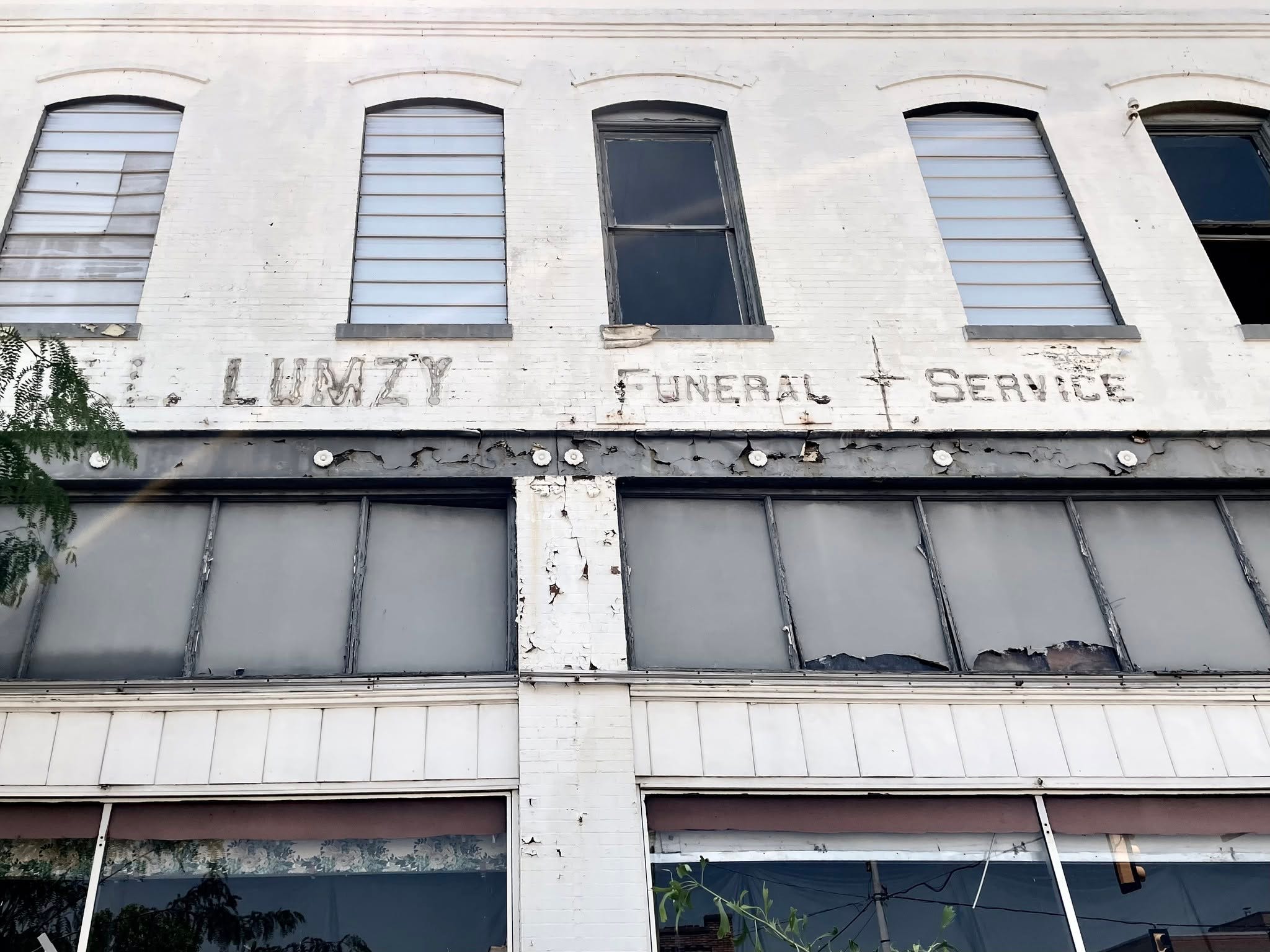
When emancipation arrived in the American South, it did not arrive whole. Freedom came without protection, without capital, and without systemic respect. In town after town across Alabama, even the sacred act of laying a loved one to rest became an immediate battleground for human rights. Cut off from white-owned institutions and met with indifference dressed as professionalism, Black communities did what they have always done: they organized, they pooled resources, and they built sanctuaries of their own.
Out of this necessity, Black-owned funeral homes emerged not merely as businesses, but as foundational pillars of economic autonomy and civil rights sanctuaries. Because their income did not depend on white patronage, these directors held a rare, powerful independence. They quietly funded movement work, hosted organizing sessions in their chapels, and guarded a community’s grief during its darkest years.
But precisely because these institutions represented Black economic power, they became prime targets for corporate and regulatory strangulation.
The Under-the-Table Monopoly
For decades throughout the mid-to-late 20th century, a suffocating monopoly dominated Alabama’s death care landscape: the corporate alliance between Liberty National Life Insurance Company and Brown-Service Funeral Homes.
Liberty National flooded the state with cheap “burial insurance policies.” The catch? These policies strictly mandated that families use their specific, white-authorized network of funeral homes to receive full value. Independent Black funeral homes were systematically locked out.
If a Black family insisted on burying their loved one through a trusted Black-owned establishment, the corporate structure penalized them ruthlessly. The policy’s payout value was slashed to fractions. In May of 1970, trailblazing directors decided that the public needed to understand the quiet warfare happening behind the scenes.
Publishing a stark, front-page exposé in The Alexander City Outlook titled “Why Aren’t Burial Contracts Illegal in Alabama?”, leaders like Otis Armour broke the silence. They exposed an anti-competitive system where Black directors were forced to accept payouts as shockingly low as $55 on a $300 policy, or $175 on a $600 contract. It was an economic siege designed to force Black entrepreneurs out of business and strip Black families of their agency in mourning.
Five years later, in October 1975, nine courageous professionals from the Progressive Funeral Directors of Alabama stopped fighting purely in print and took their fight to the federal courts, launching the historic antitrust lawsuit Battle v. Liberty National Life Insurance Co. They stood up to a multi-million dollar corporate empire to protect the right of Black families to grieve with dignity.
From Corporate Monopolies to Regulatory “Death Taxes”
History has a persistent, tragic habit of repeating itself. The tactics change, but the target remains the same.
When corporate monopolies are dismantled, systemic barriers often disguise themselves as government bureaucracy. We see this historical line directly today in the modern legislative landscape of Alabama. What was an anti-competitive corporate penalty in 1970 has evolved into administrative overreach in 2026.
Recently on The Southern Justice Archive, we highlighted a public objection raised by my son, Wilkie S. Frieson, an Alabama Licensed Funeral Director and Embalmer. In a formal letter addressing the Alabama Board of Funeral Service, he drew a line in the sand against Senate Bill 107—a piece of legislation authorizing steep administrative fee increases on funeral establishments.
Wilkie rightfully unmasked this bureaucratic mechanism for what it truly is: a modern “Death Tax.”
When most citizens hear the phrase “funeral regulation,” they assume it is a dry, technical topic reserved for boardrooms and business owners. But as history teaches us, what happens inside Alabama’s regulatory systems never stays there. It flows downward. Increased administrative burdens and climbing state fees do not just impact a ledger; they directly penalize grieving mothers, widows, and children trying to find the means to bury a parent.
The independent, family-owned Black funeral home has always operated on thin margins because it carries the financial grace and emotional weight of the community it serves. Forcing these small businesses to absorb rising state fees means forcing a choice between economic survival and community care. It is the exact same financial squeeze Otis Armour and Edgar H. Battle blew the whistle on fifty-six years ago.
Documenting the Endurance
The fight waged by the Progressive Funeral Directors of Alabama was a quiet war, fought by subdued professionals who carried out their resistance with immense dignity. Because they did not seek the spotlight, their history was nearly buried alongside the generations they laid to rest.
Through the document repositories at the Clark Historic Landmark Site and the ongoing contemporary critiques here at The Southern Justice Archive, we refuse to let that history fade.
Understanding the “back-story” of the 1975 antitrust lawsuit is not just an exercise in historical preservation. It is the exact armor we need to recognize, name, and combat the systemic inequities facing Alabama families today. The arena has shifted from corporate policy to senate bills, but the struggle for dignity in death continues. And just like those nine directors who came before us, we will continue to wage the war for truth.
The Southern Justice Archive
Presented By: Charlotte A. Clark-Frieson aka
“Wilkie Clark’s Daughter”

Documenting what happened, Preserving what matters, Protecting what must endure!